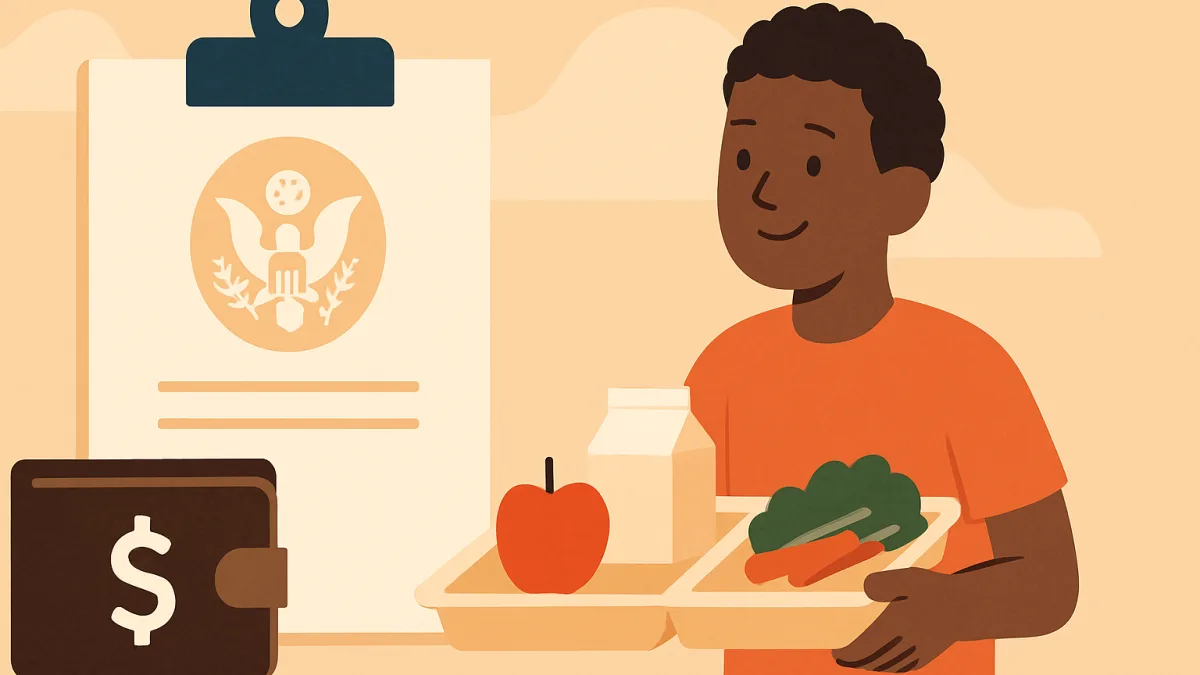
For millions of American families, knowing that children will receive a healthy meal at school provides both nutritional and financial relief. The National School Lunch Program (NSLP) is a federally assisted meal program that offers free or low-cost lunches to eligible students in public schools, nonprofit private schools, and residential child care institutions. Understanding how the program works can help your family take advantage of a benefit you may already qualify for.
Anúncios
What the National School Lunch Program Is
The NSLP is administered nationally by the U.S. Department of Agriculture (USDA) and operated locally by state agencies and individual school districts. Each school day, participating schools serve meals that meet federal nutrition standards, including requirements for fruits, vegetables, whole grains, and limits on saturated fat and sodium. In exchange for following these standards, schools receive cash reimbursements and USDA foods for the meals they serve.
A companion program, the School Breakfast Program, works the same way to provide morning meals. Many schools participate in both, so a qualifying child can often receive breakfast and lunch.
Cursos Gratuitos con Certificado:
Aumenta tu salario con cursos online.
Ver cursosYou will stay on this siteWho Qualifies for Free or Reduced-Price Meals
Eligibility is based primarily on household income and family size. Children fall into one of three categories:
Anúncios
- Free meals for children in households with incomes at or below a lower threshold of the federal poverty guidelines.
- Reduced-price meals for children in households with incomes within a moderate range above that threshold. The cost for reduced-price lunches is capped at a small amount set by federal rules.
- Paid meals for children in higher-income households, though these are still partially subsidized.
Some children are automatically eligible, or "categorically eligible," without a separate income review. This includes children in households that receive Supplemental Nutrition Assistance Program (SNAP) benefits (food stamps) or certain other assistance, children who are homeless, in foster care, or enrolled in Head Start. Because income limits change each year, check the official program site for current figures.
How to Apply
Applying for the NSLP is a straightforward process. Most families apply by completing a meal application provided by their child's school, usually at the start of the school year. You can typically submit it on paper or online through the district's website. The application asks for household members, income, and, in some cases, a case number if you receive other benefits.
Step-by-Step Instructions for Application
- Contact your child's school or district nutrition office to request an application. This can often be done through the school’s website or by calling the office directly.
- Complete the application by listing all household members and total income. If applicable, provide your SNAP or Temporary Assistance for Needy Families (TANF) case number. Ensure that all information is accurate to avoid delays.
- Sign and return the form. Only one application is needed per household, even if you have multiple children enrolled in different schools.
- Wait for a determination letter, which you should receive within about 10 working days. This letter will inform you of your eligibility status.
You can apply at any point during the school year if your income changes, such as after a job loss. It’s important to keep your school informed of any changes in your situation.
Community Eligibility and Universal Meals
Some schools and districts in low-income areas participate in the Community Eligibility Provision (CEP), which allows them to serve free meals to all enrolled students without collecting individual applications. This program simplifies the process for families and ensures that no child goes hungry at school. A handful of states have also adopted universal free meal programs, where all students receive free meals regardless of income. If your child's school offers free meals to everyone, you generally do not need to apply.
Why It Matters
Research consistently links proper nutrition to better concentration, attendance, and academic performance. Free and reduced-price meals also ease grocery budgets, freeing up money for other essentials. There is no shame in applying; these programs exist precisely to support working families and children. Schools that participate in the NSLP help ensure that children have access to nutritious meals, fostering an environment where they can thrive academically and socially.
Common Mistakes to Avoid
When applying for the NSLP, families may encounter several pitfalls that can lead to delays or denials. Here are some common mistakes to avoid:
- Incomplete Applications: Ensure that all sections of the application are filled out completely. Missing information can result in processing delays.
- Incorrect Income Reporting: Be accurate when reporting income. Include all sources of income and use the correct time frame (e.g., annual income). If your income fluctuates, use the average.
- Missing Deadlines: Pay attention to application deadlines, especially at the beginning of the school year. Late applications may not be considered until the next review period.
- Not Updating Information: Inform the school of any changes in household income or family size throughout the school year.
Practical Tips for Maximizing Benefits
Here are some practical tips to help you navigate the NSLP and maximize its benefits:
- Stay Informed: Regularly check the USDA Food and Nutrition Service website for updates on eligibility criteria and program changes.
- Communicate with School Officials: Don’t hesitate to reach out to school nutrition staff for assistance with applications or to clarify any questions you may have.
- Encourage Participation: Encourage your children to try new foods offered at school. This can help them develop healthier eating habits.
- Plan Ahead: If you know your financial situation may change, consider applying early in the school year so you can secure benefits as soon as possible.
Frequently Asked Questions (FAQ)
1. How often do I need to apply for the NSLP?
You generally need to apply once per school year. However, if your income changes during the year, you should submit a new application.
2. What if my child is in a private school?
Many nonprofit private schools participate in the NSLP. Check with your child’s school to see if they offer the program and how to apply.
3. Can undocumented children apply for free meals?
Yes, undocumented children can receive free meals through the NSLP. The program is designed to ensure that all children, regardless of immigration status, have access to nutritious meals.
4. How can I find out if my school participates in the NSLP?
You can check with your child's school or visit the USDA Food and Nutrition Service website for a list of participating schools and districts.
To learn more about eligibility and find program details, visit the USDA Food and Nutrition Service at https://www.fns.usda.gov. When you are ready to apply, reach out to your child's school office, which can walk you through the simple process and confirm your eligibility for the current year.